
In October 2024, at Branding Science’s BrandFest ‘25 event, a group of cross-functional pharma professionals came together to discuss three key topics facing the industry in relation to building brilliant brands:
- The future of insight generation in brand development
- The future skills/capabilities which marketeers will need to create brands
- The future of brand planning in a data-rich, AI-dominated landscape
So, what were the key points from their discussion? Read on to find out or click here to download our article.
At times, it feels like pharma has fallen out of love with creating brands that resonate and endure, as the important aspects of a brand’s narrative are now focused on the science and educating a prescriber on the need to treat a condition.
In these situations, it feels like the role of brand marketing has lost its way, losing out to the misconception that a scientific, efficacy-based story, wrapped up in a safety and tolerability message, will be effective in convincing clinicians to prescribe for a particular condition.
Prescribers have limited time to make treatment decisions, and their decision-making is impacted by habits and shortcuts, so it’s hard for any pharma brand to stand out from the crowd when just focusing on the clinical end points in pivotal trials.
Brands are missing out – losing potential customers who stick to older, established treatments.
There is a clear need for the prescriber to connect with a brand on an emotional level, and brand marketeers need to help create the right setting and behaviours to ensure this happens.
So, in the context of this, what can a brand marketeer do to address the need to build an emotional brand connection?
The solution is to go back to the basics, cut out the noise and create the space, environment and desire to build an emotionally charged brand narrative.
The core elements of building a brand have not really changed, even in the advent of AI. The key building blocks are:
- Knowing your customers – their drivers, goals and ambitions
- Understanding and articulating their unmet needs – both rational and emotional
- Demonstrating how your brand can address their needs
- Effectively communicating your brand’s benefits
- Building behavioural science into your plans and actions to effectively nudge their behaviour for the outcomes you are looking for
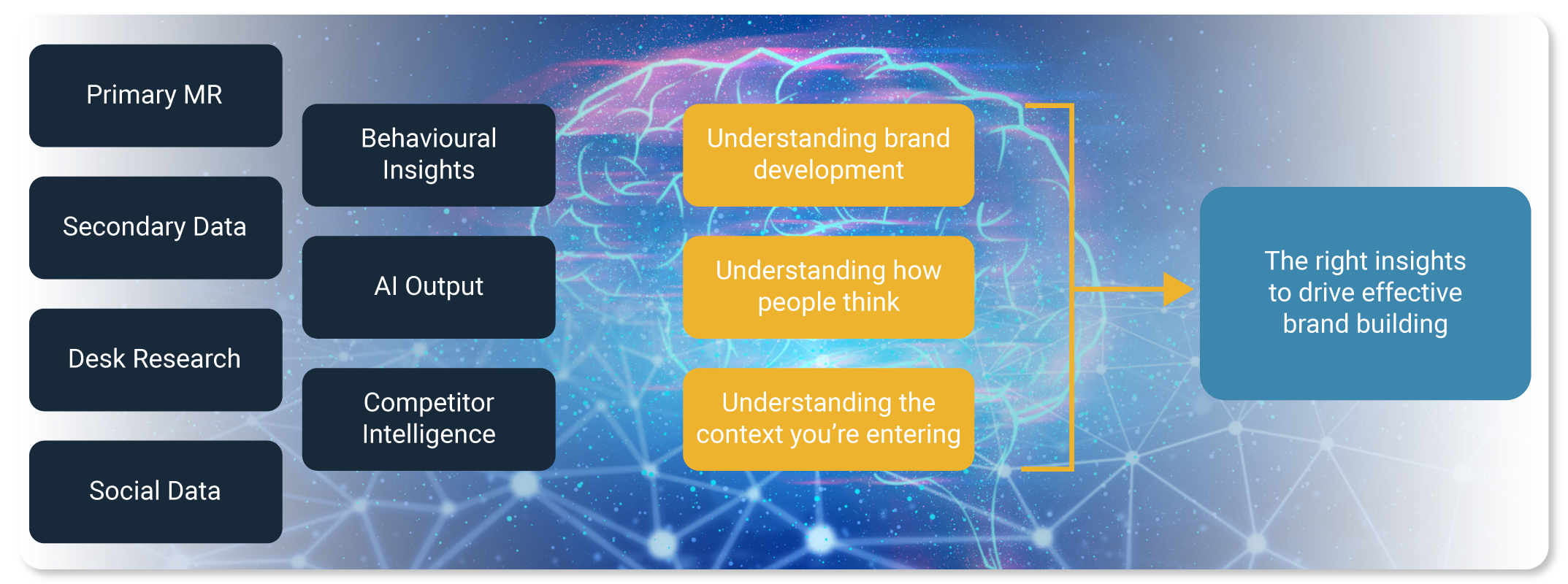
The future role of insights generation in brand development
The role of quality insights within brand building is clear, but pharma is obsessed with getting more and more data, often losing sight of (or not even finding) the ‘golden nugget’ insights that truly make a difference to a brand.
A focus on speed and innovation (often at the expense of thinking frameworks and time) feels like it is causing insights work to move in the wrong direction – towards the delivery of, typically, less impactful research observations, rather than the insights into what is really going on. This is because the insights need extra analysis time to uncover.
A highly effective insights lead has the ability to use a contextual lens to distil the insights, bring the important aspects to life, and use the right level of thinking to create real value. The introduction of AI into this process can enhance the outputs, but should not replace the thinking.
The future skills/capabilities which marketeers will need to create brands
The brand marketing role has become more demanding, with the introduction of new assets in complex therapeutic areas coupled with challenging access landscapes. Despite this, there has been a reduction in the perception of the value of marketing, which in many organisations is seen as a step-through role into bigger and better things, meaning it’s rare for someone to stick around long enough to effectively build their brand, never mind build a long-term career as a marketeer.
One of the key challenges which a brand marketeer faces is how to help clinicians decide the best treatment to offer patients; and this emotionally-led decision-making is where a good marketeer can make a meaningful difference to their brand.
The industry is wrestling with some key questions:
- What is the role of marketing? Should it be split into ‘digital’, ‘strategic’ and ‘tactical’, or is it all just marketing?
- How can brand marketeers focus on the basics and not get distracted by ‘shiny new’ approaches like apps or VR?
- How can marketeers ensure brand strategy is both tactically and strategically proficient?
Brand marketeers lack formal training: research across 50+ brand marketeers revealed only 14% had received formal marketing training.
So, what is the answer? How can a brand marketeer set themselves up for the future?
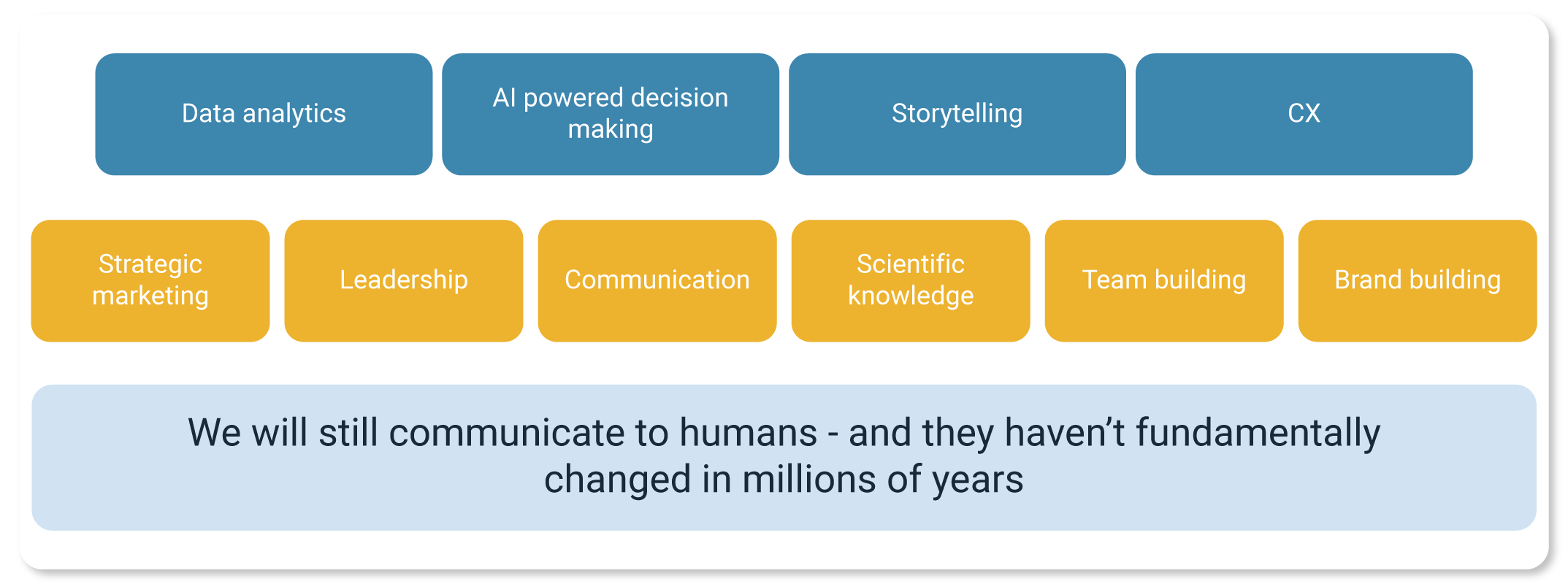
Future marketeers need a suite of capabilities, built from formal training and in-role experience, to build the core skill mix to raise the profile of brand marketing and drive commercial success.
The future of brand planning in a data-rich, AI-dominated landscape
The final discussion point focused on the future of brand planning, following on from our Branding Science webinar held in August: The state of pharma brand planning in 2024. Click below if you would like to watch the webinar in full, on demand.
Brand planning is seen as a chore, takes too long, is pointless, laborious and ‘old hat’ in the advent of AI.
So, how should brand planning evolve, to be seen to create value and provide the necessary direction to an organisation?
Brand planning should be viewed as an exciting opportunity where marketeers can excel and develop plans to make their brand a success (and serve multiple functions – a fact that is often lost on those who create them).
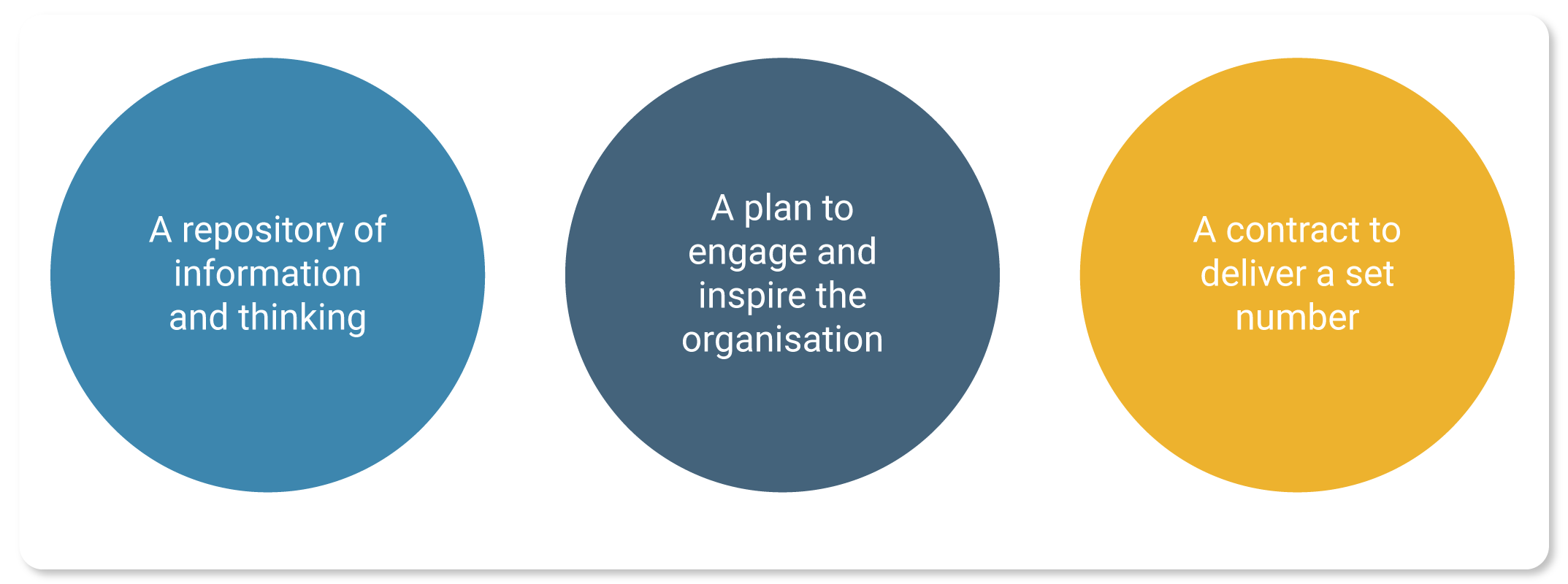
An analysis of the current state of pharma brand planning highlighted some interesting factettes.
A conservative estimate puts brand planning as taking, collectively, over one million person-hours annually across pharmaceutical companies, and yet:
- Strategic imperatives are often badly written, using value judgements such as ‘poor’/’best’ or are divorced from the situational assessment
- Brand plans, overall, are poorly constructed, with a recent benchmarking analysis highlighting significant gaps, especially in patient and HCP insights
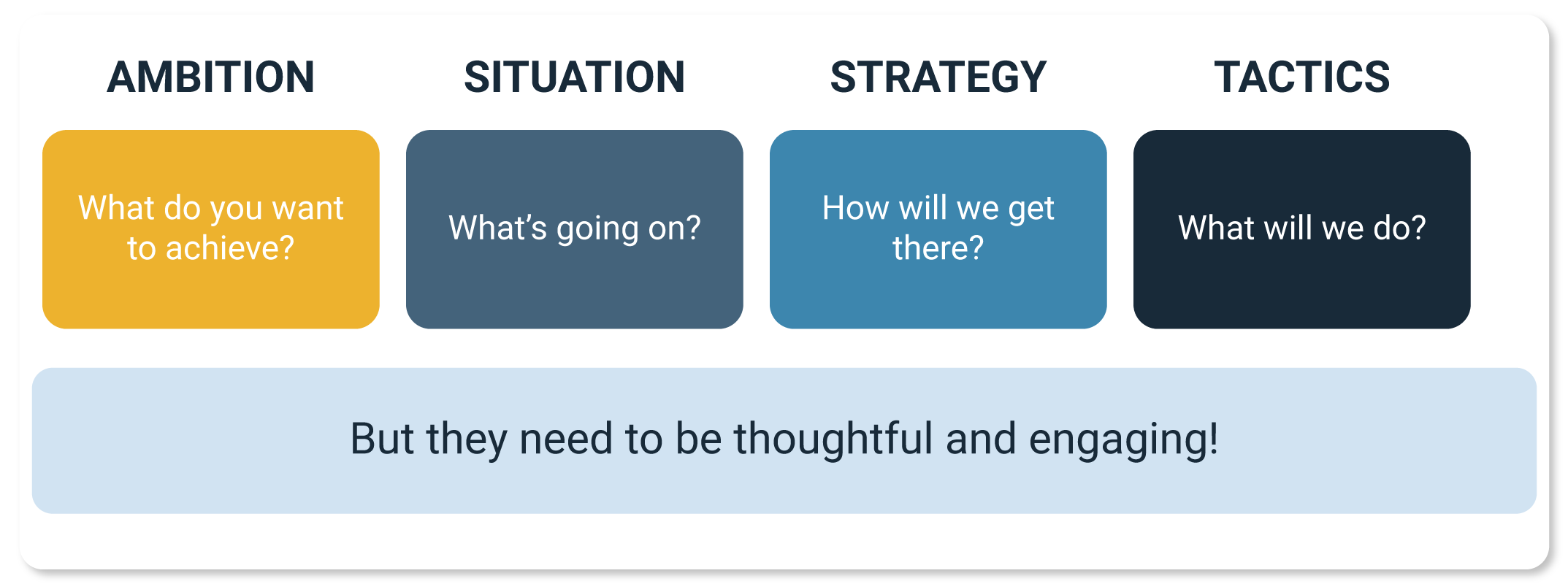
The solution is to focus on keeping plans simple; and, although an in-depth template is often used, four key steps can help shape the thinking:
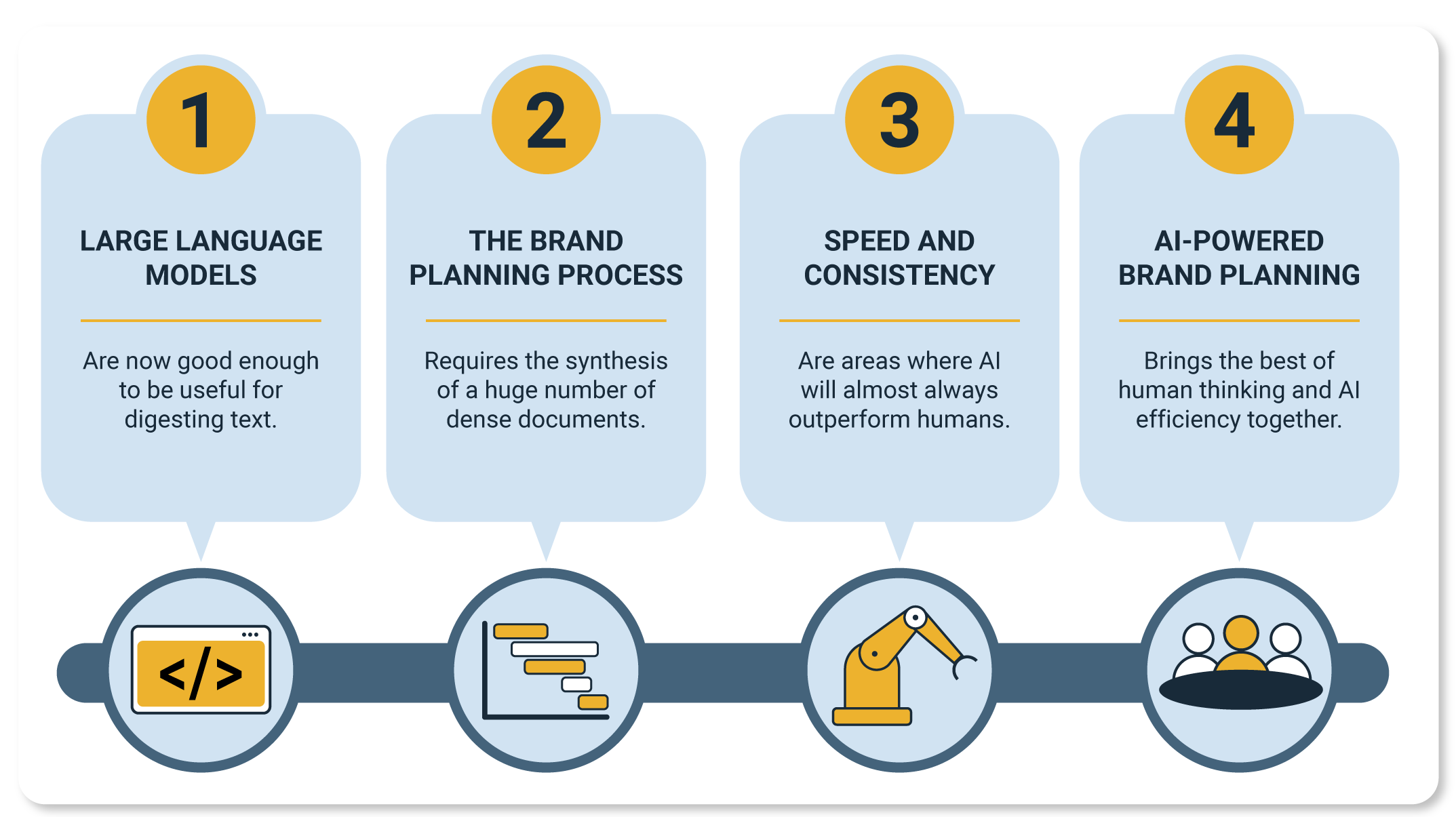
Large language models can also be used to support the whole brand planning process.
Overall, the quality and standard of brand planning across the industry is below where it needs to be, and this will have a detrimental impact on brand performance.
Brand marketeers can make a real difference by focusing on the core elements in the development of the brand plan, bringing the right insights, skillset and mindset to the process to develop brand plans which enthuse and excite the reader and provide clarity across the organisation.
The use of AI should not be seen as a replacement for the brand marketeer, but can support the process, to enable the right choices to be made for the brand.
Want these insights in PDF format instead? Click here to download our article.
Get in touch
If you would like to get in touch about any aspects of this article, please contact:
Simon Fogg, Director, Strategic Consulting: [email protected]